

You want a place where you can walk in, drop a ball, swing, and feel like you’re on the range.
But you also need that place to be… a normal space:
-
A garage where a car still has to live
-
A basement where the kids play or you store half your life
-
An indoor room that can’t look like a permanent construction site
And in the middle of all that real-life chaos, you’re trying to fit a Net Return:
-
Maybe a Junior or Mini in a smaller room
-
A Home Series net in your single-car garage
-
Or a Pro, Pro 8, Pro 9, Pro 10, or Pro XL in a bigger space
The fear is very normal:
If I set this up, will it wreck the room?
Will the car still fit?
Will the ceiling or garage door be in the way?
Will my family hate me for turning the house into a driving range?
This guide is here to solve that exact problem.
You’re not just going to stick a net somewhere.
You’re going to design a garage or basement golf setup that:
-
Still lets your space do its normal job
-
Feels clean, safe, and intentional
-
Can grow into a full indoor golf room if you want
We’re going to talk layouts, not just measurements:
-
Single-car and two-car garage golf setup ideas
-
Smart ways to use a basement golf setup without it feeling cramped
-
How to deal with ceiling height, beams, and garage doors in a practical way
-
Storage, folding, turf, lighting, noise - all the stuff that matters when you actually live there
If you want exact “how many feet” type measurements and safety rules,that information can be found here.
Here, we’re focusing on how to make the room work.
Garage Vs Basement Vs Indoor Room - Which Is Right For You?
Before you think about layouts, it helps to ask: where is your best spot?
You might technically be able to squeeze a Net Return into three or four different places, but each option has a different personality.
Garage Golf Setup
Pros
-
Concrete or solid floor is perfect for turf and mats
-
Nice open space to create a private area for your practice
-
Usually enough length to hit all clubs, including driver
-
Feels like its own zone that’s separate from the main house
Cons
-
Cars come and go, so you can’t always leave everything out
-
Temperature swings: hot in summer, freezing in winter
-
Door rails, motors, and lights can interfere with your swing or projector
A garage is ideal if you want a multi-use bay: car + golf + maybe a gym.
Basement Golf Setup
Pros
-
Sim cave vibes: quiet, private, and protected from weather
-
Easy to darken the room for a projector or screen
-
Less neighborhood visibility (no one sees you hitting at 10 pm)
Cons
-
Ceilings are often low, especially under beams
-
You may have columns, pipes, stairs, or odd shapes to work around
-
Some basements are damp or echo-y if untreated
A basement is great if you want a permanent, all-year indoor golf room, even if it’s mostly irons or wedges because of ceiling height. The challenge is most basements lack the ceiling height required to swing a club, let alone your longer driver. Ideally you want a ceiling height of 9’ or higher.
Indoor Room Setup (Spare Room, Office, Etc.)
Pros
-
Convenient – in the middle of the house
-
Perfect for wedges, chipping, drills, putting, and mid-irons
-
You can make it look really clean and minimal
Cons
-
Limited ceiling height and width for driver
-
You must be extra careful about walls, windows, and furniture
-
It’s usually a shared room, so storage discipline is key
This guide is going to focus mainly on garage and basement layouts, but everything we’ll talk about applies to any indoor golf net setup you create.
Key Design Principles For Garage And Basement Net Return Setups
Before we dive into specific layouts, it helps to have a few rules in your head.
These keep your setup from turning into a mess.
1. Design Around Your Hitting Line, Not Just The Net
Most people do this backwards.
They find a wall, push the net against it, then stand wherever there’s space left.
Do it the other way:
-
First, decide where you will stand and swing
-
Draw your hitting line in your head (from ball through the centre of the net)
-
Then position the Net Return so the frame catches that line
This matters more in garages and basements than you’d think.
You’d be surprised how often a 4 inch shift left or right completely changes how comfortable the swing feels.
2. Accept That The Space Has Another Job
Your practice area is never going to be a pure driving range.
-
In a garage, cars still need to park.
-
In a basement, people still walk through, store things, or maybe watch TV.
So your design mindset should be:
“How do I make this bay appear and disappear quickly and cleanly?”
That means:
-
Clear home positions for your net, mat, and turf when not in use
-
A repeatable pull out, set up, hit, put away flow
We’ll hit storage and folding later, but bake this mindset in from the start.
3. Respect The Ceiling And The Ugly Stuff On It
In a garage or basement, the ceiling isn’t just flat and friendly:
-
Garage door rails sit low in some spots
-
Openers and lights hang down
-
Beams and pipes cross the room at odd angles
Rather than thinking this ceiling is bad, think: where is the highest safe swing arc?
You might find:
-
Moving your mat 1 foot forward or backward puts your driver swing under the highest part of the ceiling
-
You can use one area for irons/wedges and another for driver if height varies
4. Plan For Future Upgrades (Without Committing Yet)
Even if right now it’s just you, a mat, and a Net Return Home net in your garage, you might later want:
-
A launch monitor
-
A projector and screen
-
Better turf or lighting
If you roughly know:
-
Where a monitor could go
-
Where a screen could hang
-
Where cables could run
…you avoid having to completely redesign the whole space later.
Single Car Garage Golf Setup Layouts
A single-car garage is the most common indoor golf space people start with.
You’ve usually got:
-
Enough length for a full swing
-
Width that’s tight but workable
-
Ceiling height that’s okay-ish if you plan it well
Let’s look at some layout options you can actually copy.
Layout 1 - Net Against The Garage Door, Car Reverses Out
This is the classic garage golf setup.
When It Works Best
-
You have a standard single-car garage
-
You’re happy to roll the car out when practising
-
You want a simple ‘door open, hit balls, door closed’ routine
How You Arrange It
-
Park the car as normal
-
When you want to practice:
-
Reverse the car onto the driveway
-
Pull your Net Return into place just inside the garage door
-
Drop your mat 7-10 feet back from the net
-
You hit facing the garage door / driveway side
Good Net Return Choices
-
Home - perfect all-rounder for this layout
-
Pro or Pro 8 - if your garage width and ceiling allow
Little Design Details That Help
-
Put a small strip of tape on the floor where the front legs of your net should sit, so you set it up in the same place every time
-
Store in the included Duffle Bag when not in use
-
If you ever add a launch monitor:
-
Keep its power cable in a wall-mounted basket
-
Use a marked ‘Tech Spot’ on the floor where the tripod always stands
This layout is simple, repeatable, and keeps your car’s normal parking routine almost unchanged.
Layout 2 - Net Along The Side Wall, Car Pulled Forward
Sometimes your garage is long enough that you don’t have to hit towards the door at all.
When It Works Best
-
You have a deeper-than-average single car garage
-
You can park the car slightly forward or backward to clear a side wall
-
You’d rather not move the car out every time
How You Arrange It
-
Net Return lives along the side wall, not the garage door wall
-
Your hitting line runs parallel to the length of the garage door
-
The car can either:
-
Park ahead of your hitting mat, or
-
Park behind it, depending on door placement
Good Net Return Choices
-
Mini or Home if width is limited
-
Pro or Pro 8 if you’ve got a decent width and want more room
Things To Watch
-
You’ll almost always want side barriers if shelves, bikes, or stored items are on that same wall
-
You need a very clear rule: car is either fully behind or fully in front of the hitting area - never “half in the middle”
This layout is amazing if your garage is long but not super wide. It keeps everything more permanent and “studio-like”.
Layout 3 - Pack-Away Park And Play Garage Bay
Here, you design the whole space so your bay can appear and disappear in minutes.
When It Works Best
-
You must park the car inside most of the time
-
You can’t leave the net out permanently
-
You value fast setup / teardown
How You Arrange It
-
Net Return:
-
Either fully disassembled and stored in its bag
-
Or Pushed up against a side wall
-
Turf or mats:
-
Rolled up and stood in a corner
-
Or slid under shelves/workbench
-
When you want to practice:
-
Reverse the car out
-
Pull the net to its taped home position
-
Roll the turf out and place the mat on its marks
-
Start hitting
Smart Quality-Of-Life Moves
-
Use colored floor tape to show:
-
Net position
-
Mat position
-
Ball position
-
Keep a small ‘golf crate’ with:
-
Balls, tees, alignment sticks, towel, impact tape
-
You bring out the crate, and everything you need is right there
It takes effort to set up this system once… but then each session feels effortless.
Two Car Garage Golf Setup Layouts
If you have a two-car garage, you have a lot more freedom.
You can actually carve out a dedicated bay on one side.
Layout 1 - Dedicated Bay On One Side
One side is for driving and parking.
The other side evolves into your golf studio.
When It Works Best
-
You have two cars but one side is more consistently free
-
Or you’re okay with one car living outside
-
You want a semi-permanent area that always feels like “the bay”
How You Arrange It
-
Net Return along the side or back wall of one half
-
Turf running out from the net toward the centre
-
Hitting mat always in place, or just rolled back a little when not in use
-
Storage rack, bag stand, or small cabinet on that same side for your gear
Ideal Net Return Models
-
Home if you want compact but serious
-
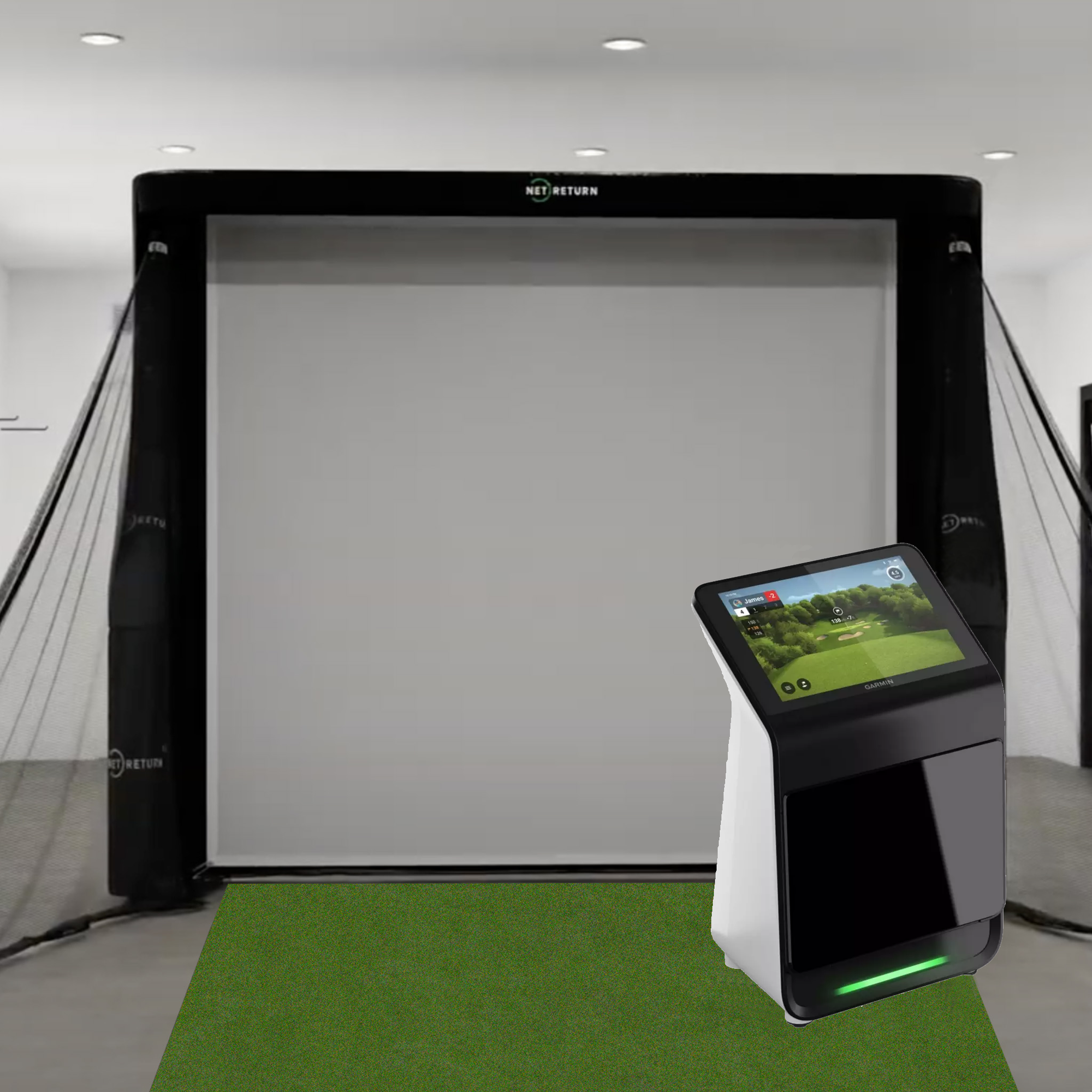
Pro, Pro 8, Pro 9 if you want a proper indoor golf net setup that feels like a commercial bay
This layout is the closest you get to having a ‘mini golf studio’ at home.
Layout 2 - Shared Bay With Net
Here, both sides still need to be flexible for cars.
When It Works Best
-
Both cars regularly use the garage
-
You can only leave the net out during practice, not 24/7
-
You still want one favored side for golf
How You Arrange It
-
Net Return:
-
Stays assembled, but placed against the wall when not in use
-
Cars:
-
Park normally on both sides, but with marked lines on the floor so they don’t intrude on the hitting area
-
Practice time:
-
One car moves out
-
You pull the net away from the wall onto its marks
-
Place turf in hitting position
Helpful Tricks
-
Place turf vertically when it’s rolled up to save floor space
-
Use a slim vertical cabinet to store balls and accessories
This gives you a serious golf bay on demand, without giving up the functionality of a two-car garage.
Layout 3 - Golf And Gym Combo Garage
This is where your garage becomes your sports hub.
When It Works Best
-
You already have a small gym area: rack, dumbbells, treadmill, bike, etc.
-
You want golf to integrate with that, not fight it
How You Arrange It
-
Net Return bay on one side or one end
-
Gym equipment on the other
-
Turf in the hitting zone that:
-
Doubles as a stretching or mobility area
-
Can be partly used for bodyweight exercises
Very Practical Details
-
Make sure your gym equipment (especially racks) is not where your follow-through could hit it
-
If you use bars or plates near the bay, keep them racked and not lying on the ground in your swing path
-
Treat the entire hitting line as a no-storage zone: nothing heavy, sharp, or tall belongs there
This setup works brilliantly with Pro Series nets because the bigger frame feels right in a more fully “kitted out” space.
Basement Golf Studio Layouts
Now let’s head downstairs.
Basements can be awkward… but also insanely good for indoor golf once you understand the quirks.
Layout 1 - Straight Wall Studio
This is the “obvious” basement layout, but we can still do it smartly.
When It Works Best
-
You have a wall that’s wide enough to host the net
-
The ceiling is at least decent in height along that wall
-
The length from wall to opposite wall gives you space for a stance
How You Arrange It
-
Net Return centred on the back wall
-
Turf strip or mat running straight toward the opposite wall
-
Hitting mat around the middle
-
TV or monitor on the side wall if you use video or a sim
What Makes It Feel Good
-
Paint or panel the back wall darker so it feels like a ‘bay’
-
Use a slightly thicker turf to soften the sound and feel
-
Keep the walking path behind you clear so nobody has to squeeze past your backswing
This works nicely with Mini, Home, Pro, Pro 8, depending on your width.
Layout 2 - Corner Setup For Narrow Rooms
Sometimes your basement is long and skinny. A straight setup can feel too tight.
When It Works Best
-
One corner of the room is wider or taller than the rest
-
You need to use the diagonals of the room to gain space
How You Arrange It
-
Net Return placed diagonally into a corner
-
Hitting mat also slightly diagonal, so your hitting line runs from one corner towards the opposite side of the room
-
Side barriers help protect exposed walls on the open side
Why This Helps
-
Diagonals often give you:
-
The longest ball-to-net distance
-
The most swing width away from beams or low points
-
The ‘corner studio’ feel can actually look stylish if you design it intentionally
A Home or Pro 8/9 net tends to shine in this type of layout.
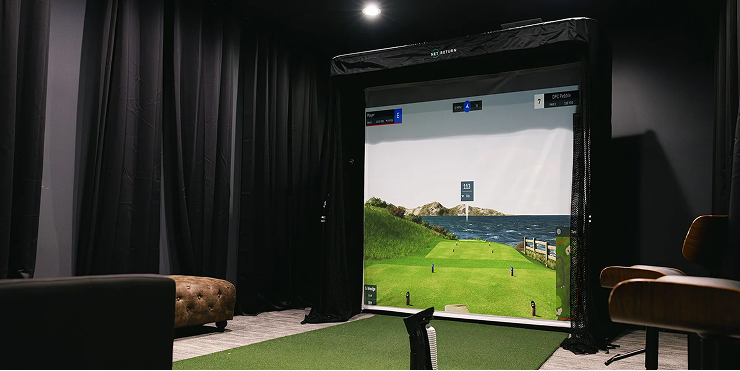
Layout 3 - Full Golf Cave With Simulator
This is the dream: basement as proper indoor golf simulator.
When It Works Best
-
You have one room that can be fully dedicated to golf
-
Ceiling height is high enough for a driver
-
You’re okay with adding a screen, projector, and tech
How You Arrange It
-
Net Return behind or integrated with an impact screen
-
Projector mounted on ceiling or on the flooe, out of your swing path
-
Hitting mat centred with a comfortable stance area
-
Seating or a sofa behind for friends/family
-
Darker walls, minimal light leaks for a clean sim picture
Net Return Models That Fit This Vibe
-
Pro 8, Pro 9, Pro 10, Pro XL - the larger the room, the bigger a frame looks “right”
Even if you don’t install full sim tech now, designing the room to support it later is smart.
Think of cable routes, outlet placement, and screen position upfront.
Ceiling, Beams, And Garage Door Openers - Solving Real World Problems
In almost every real project, the ceiling is the part that surprises people.
Not just height, but what’s attached to it.
Let’s break down the most common issues and how you can work around them.
Garage Door Rails And Openers
-
Rails usually sit lower than the highest part of the ceiling
-
The opener unit often hangs down right where you want to swing
Fixes
-
Move your hitting mat forward or backward until:
-
The club’s high point in your swing arc is under the highest piece of ceiling, not under the rail
-
If needed, you can:
-
Hit irons only when the door is closed
-
Hit driver when the door is open and the panels move away, creating a higher pocket
You don’t need the mat to be dead centre in the garage. You need it where your swing is happiest.
Basement Beams And Low Spots
Basements love dropping beams right through the space you want to use.
Fixes
-
Walk around the room with a driver and make practice swings in different spots; find where it feels safest and highest
-
Place your mat under that safe spot, even if it’s not in the exact centre of the space
-
Use your net’s position and the room’s shape to angle your hitting line as needed
Sometimes rotating everything by just 15-20 degrees solves the “this beam is in the way” problem completely.
Lights And Fans
-
Bright lights directly above your head can be blinding when you look up
-
Low hanging fixtures and fans are obvious no-gos
Fixes
-
Move or change light fixtures so they’re:
-
Above and slightly in front of the net
-
Or behind you, diffusing forward
-
Avoid ceiling fans in your hitting arc altogether
-
If you need air, think floor fans or a wall-mounted one out of club range
A garage or basement golf setup feels 10× better with thoughtful lighting.
Flooring, Turf, And Mat Placement For Garage And Basement Setups
The floor decides how your practice feels, sounds, and looks.
Turf Vs Single Mat
You basically have three options:
-
Single Hitting Mat Only
-
Cheapest and simplest
-
Works in tight spaces
-
But it can look a bit “temporary”
-
Turf Strip + Hitting Mat
-
A 6'-10' strip of turf under and in front of the net
-
Your hitting mat sits somewhere on this strip
-
Looks organised and clean
-
Full Area Turf
-
The whole hitting zone is turfed
-
Very sim-studio feel
-
Also helps with noise and foot comfort
For a garage golf setup, option 2 is usually the perfect balance.
For a basement golf studio, option 2 or 3 look amazing.
Underlay And Noise Control
Bare concrete + mat can be noisy and hard on joints.
-
Thin foam tiles under your turf:
-
Cut impact noise
-
Soften the feel under your feet
-
Rubber pads under the net’s feet:
-
Help with noise
-
Stop the frame from shifting on smooth floors
If you’re in a basement, especially above someone’s bedroom or living space, these small changes can make a huge difference.
Mat Alignment
This part is underrated.
-
Align your mat so the centre of your stance matches the centre of your net
-
Use tape or subtle paint lines on the floor to mark:
-
Mat front edge
-
Net leg positions
-
Ball position
Once this is dialled in, every session you step into essentially the same geometry.
That consistency is gold for your swing.
Storage, And Keeping Your Space Liveable
If your garage or basement constantly looks like a training camp exploded, your setup won’t last.
You need a way to reset the room quickly.
Storing The Net
Depending on your Net Return model and your space:
-
Fully Assembled, Always Out
-
Works in a dedicated bay or basement golf room
-
Feels like a permanent studio
-
Disassembled Into A Bag
-
Best when space is tight or the garage is fully multi-use
-
Takes slightly longer to set up, but room looks totally normal when you’re done
Pick the level that fits your life, not your fantasy.
If constant assembly annoys you, lean towards keeping the net assembled and tucked away
Storing Turf And Mats
-
Roll the turf, strap it, and stand it vertically in a corner
-
Or slide it under a workbench or shelving unit
-
Smaller mats can sometimes slide behind cabinets, fridges, or storage racks
The goal is that when someone else looks at the room, it still resembles a garage or basement, not a demo bay from a golf shop.
Storing Clubs And Accessories
Small touches make a big difference:
-
A simple wall rack for clubs
-
Hooks for:
-
Alignment sticks
-
Side barriers
-
Towel
-
A tub or crate for balls and tees
If everything has a clear home, you’ll never feel like golf gear is taking over the house.
Noise, Neighbours, And Family Friendly Garage Golf
You’re not practising in a vacuum.
There are people above, beside, or near you.
Managing Sound
-
Turf + foam underlay = quieter impact
-
Rubber or foam under net feet = less vibration into floor
-
Closing the garage door changes how sound travels:
-
Door open -> more sound outside
-
Door closed -> more sound inside but less for neighbours
In a basement, clutter and soft furnishings actually help:
-
Rugs, curtains, sofas, and even stacked boxes break up echo
Time Of Day
If you live close to neighbours:
-
Maybe don’t run full-speed driver sessions at midnight
-
Use foam balls or softer practice balls for late-night or early-morning work
-
Save the ‘loud’ sessions for reasonable hours
Clear Safety Rules At Home
Especially if you have kids or curious guests:
-
Nobody walks in front of the hitting line, ever
-
Kids are only in the bay when you’re in full control
-
No toys or random objects are allowed in the swing area
A garage or basement golf setup should feel safe to everyone in the house, not just you.
Example Garage And Basement Setup Blueprints
Let’s pull all this together into a few ready-made blueprints you can copy or tweak.
Blueprint 1 - Budget Single Car Garage Setup
-
Net: Net Return Home
-
Layout: Net against the garage door, car reverses out to practice
-
Flooring: Single hitting mat + a small turf strip in front of the net
-
Storage: Net pushed against side wall, turf rolled and stood in corner
-
Use Case:
-
After work, you reverse the car out
-
Drop the mat and turf on the marked floor positions
-
Hit 50-80 balls, pack away in under 10 minutes
Blueprint 2 - Premium Two Car Garage Bay
-
Net: Net Return Pro, Pro 8, or Pro 9
-
Layout: Dedicated bay on the left side; right side remains full-time car parking
-
Flooring: Net Return Pro Turf (6'x10') embedded or placed on top
-
Extras:
-
Side barriers
-
Small launch monitor
-
Wall rack for clubs and a small bench for shoes/bags
-
Use Case:
-
Golf bay always visually “there”
-
You can walk in and hit any time without moving the car on the other side
Blueprint 3 - Compact Basement Iron And Wedge Studio
-
Net: Net Return Mini or Home
-
Layout: Straight wall studio in a slightly narrow basement room
-
Flooring: Medium-size turf area with a simple hitting mat
-
Focus:
-
Irons and wedges only (no driver if ceiling is low)
-
Chipping and pitching target drills
-
Clock drill wedge work with or without a launch monitor
-
Use Case:
-
All-year practice, especially in bad weather
-
Quiet ‘golf cave’ where you can grind mechanics
Blueprint 4 - Full Simulator Basement Cave
-
Net: Net Return Pro 10 or Pro XL with sim kit / screen
-
Layout: Net/screen at far wall, hitting mat centred, projector ceiling-mounted
-
Flooring: Full hitting area turfed, maybe a raised platform for realism
-
Extras:
-
Side barriers integrated with enclosure
-
Launch monitor permanently installed
-
Sofa or chairs behind the mat
-
Shelves for balls, tees, and controllers
-
Use Case:
-
Friends come over for sim rounds
-
You can play 18 holes on a winter night without leaving the house
You can mix and match ideas from all of these to design something that suits your home and budget.
Final Take - Turn Your Garage Or Basement Into A Golf Space You Actually Love
A Net Return can either be:
-
A thing that lives in a box and comes out once a month, or
-
The centrepiece of a garage or basement golf setup that you love being in
The difference isn’t the net.
It’s the design of the space around it.
If you:
-
Choose the right spot (garage vs basement vs room)
-
Design around your hitting line, not just the frame
-
Respect ceiling quirks, beams, and door rails
-
Use turf, mats, and storage in a clean, intentional way
-
Keep the space multi-use so the rest of your life still works
…then you’ll end up with a golf bay that feels natural in your home, not like an intrusion.
From a simple single-car garage golf setup with a Home net and a roll-up mat…
To a full basement golf studio with a Pro Series net and simulator…
You can build this step by step, at your own pace, and always with real life in mind.
Your Net Return doesn’t have to ‘take over’ your house.
If you design it right, it becomes the best part of your garage or basement –
a space where daily life and daily practice actually work together.